At a glance
| Duration | 5 days, 4 nights |
| Dates 2026–27 | National Day: 1–5 Oct 2026 | New Year: 1–5 Jan 2027 | Spring Festival: 7–11 Feb 2027 (Lunar New Year days 2–6) |
| Location | Wudang Mountains, Shiyan, Hubei, China (UNESCO World Heritage) |
| Base | Qiongtai Wudao Academy, 1,350 m inside the scenic area |
| Age | Children 6–14 with a parent. Adults travelling alone are welcome too |
| Group size | Max 40 per session, 10–12 per teaching group |
| Language | Taught in Chinese, with English interpretation for international participants |
| Price | ¥4,500 per person (approx. US$630), adults and children same price |
Why Wudang, why now
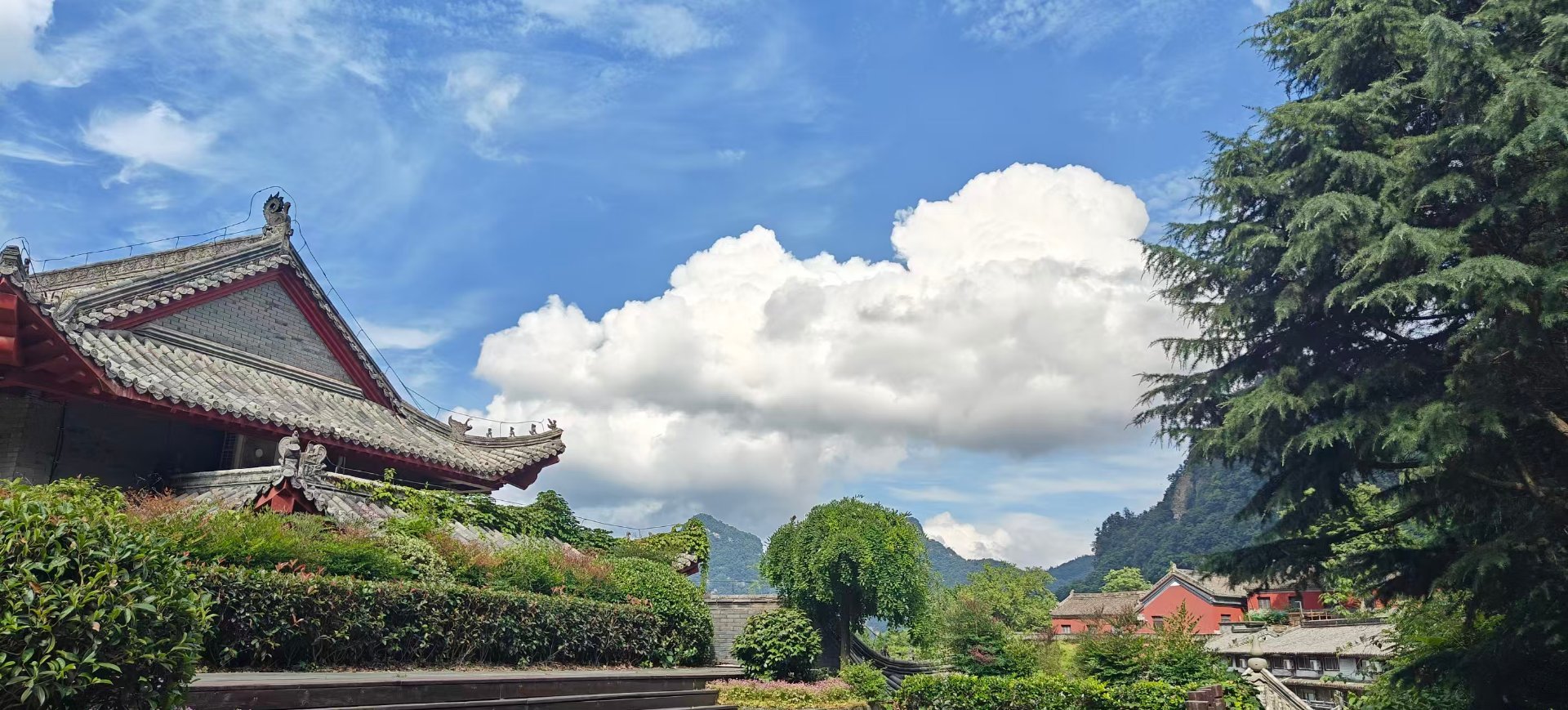
Wudangshan is where internal Chinese martial arts (neijia) were born — the home of Tai Chi as a living practice, not a park pastime. A UNESCO World Heritage Site and a national 5A scenic area, its temples cling to cliffs and ridges that have been walked by Daoist practitioners for more than six centuries.
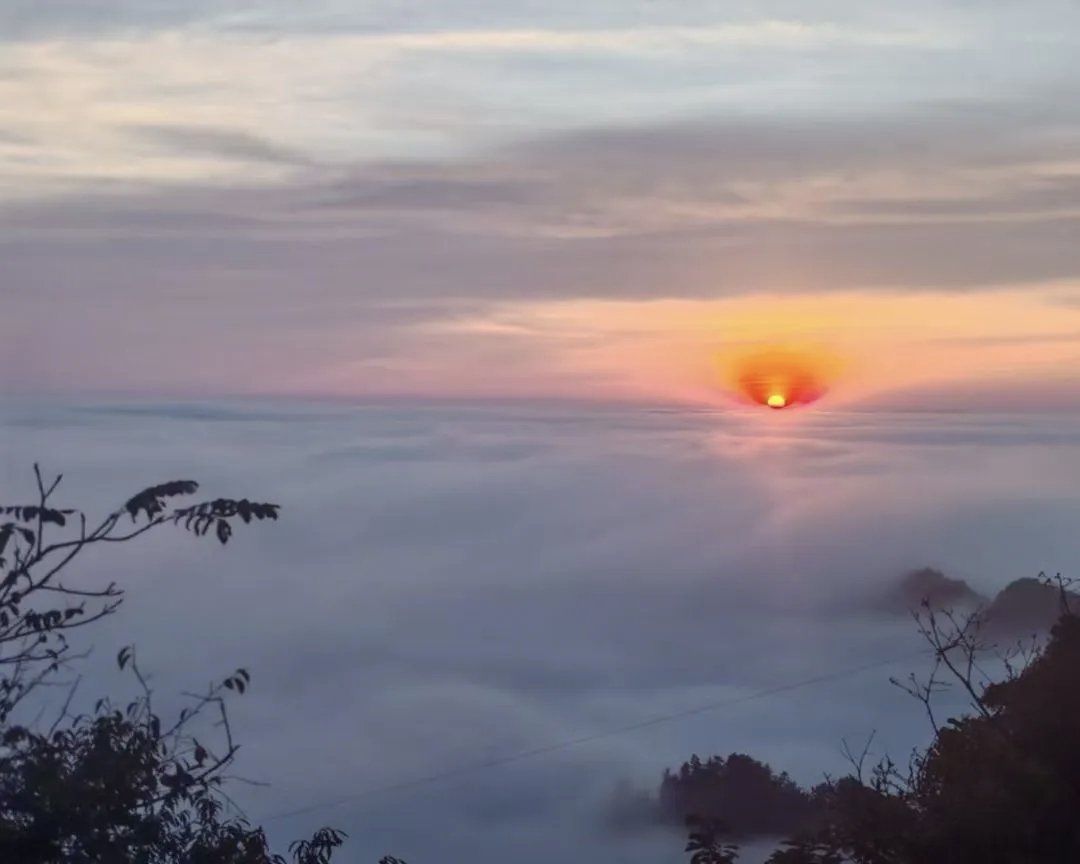
This is not a sightseeing tour with a martial arts demonstration bolted on. It is five days of living inside the mountain: waking to cloud sea, training at the hours Daoist tradition prescribes, eating what the cooks on the mountain eat, and learning a handful of forms well enough to take home.
Three seasons, one price. October brings clear autumn air and lung-nourishing morning practice. January and February bring snow on the Golden Summit, frozen cloud sea and the quietest Wudang of the year. Sessions run at National Day, New Year and Spring Festival — all at ¥4,500 per person.
Come as a family, or come on your own. The core design is parent-and-child training together, but we also accept children aged 8+ travelling independently (with full chaperoning), adults joining alone, grandparents with grandchildren, and overseas visitors arranging their own trip to China. Minimum age 6. No experience needed.
What you will actually learn
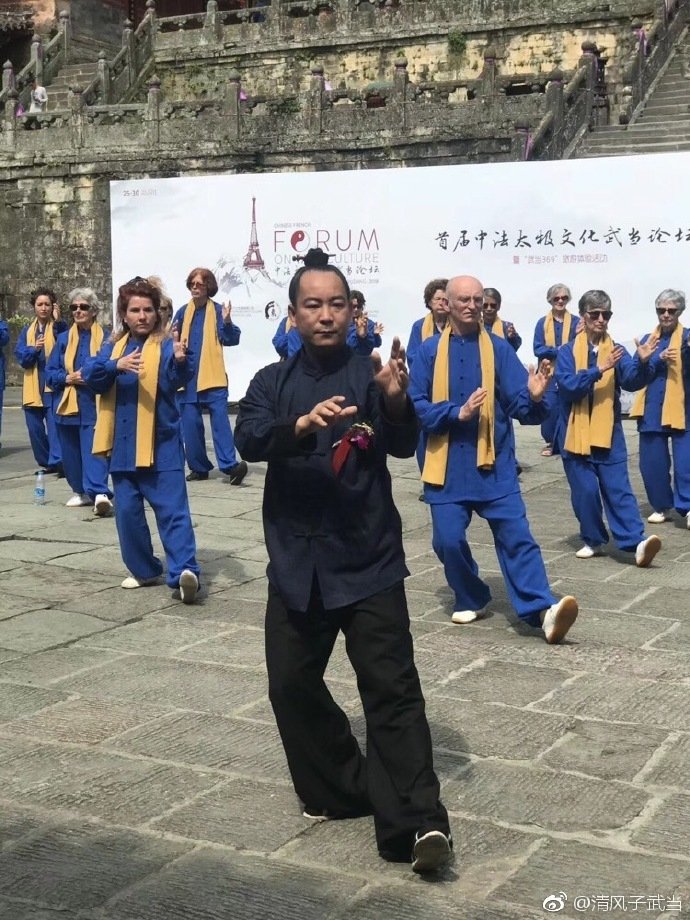
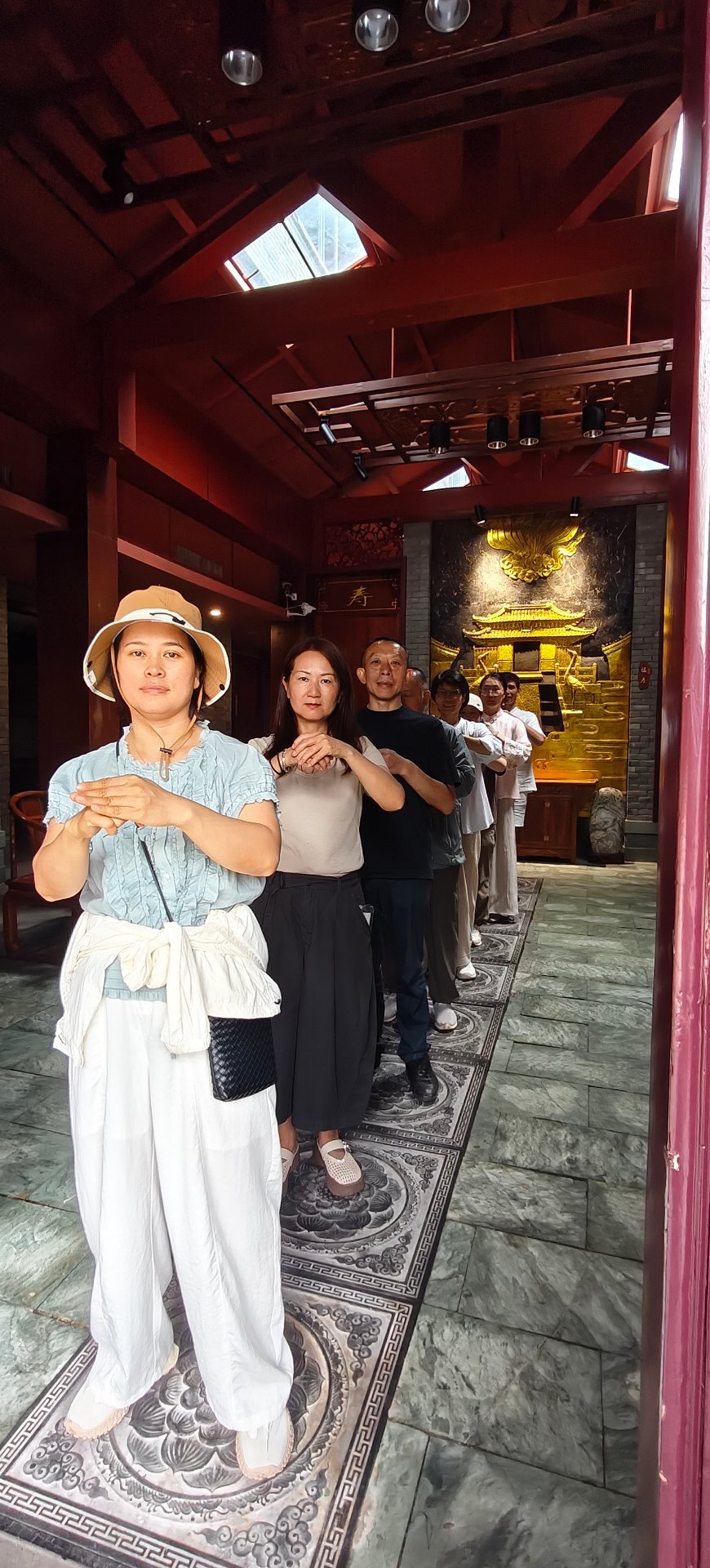
- Tai Chi Nine Forms — Nine core movements distilled from Wudang Tai Chi. Soft on the surface, quick underneath. What children actually learn is composure: steady yourself, read the situation, then act.
- Taoist Ba Duan Jin (Eight Brocades) — A thousand-year-old Daoist guiding exercise — “lift the sky with both hands”, “draw the bow to shoot the eagle”. Eight movements that open the meridians and move the qi. Suitable for every age, and easy to keep doing at home.
- Five Elements Qigong — The first practice of every morning, timed to the hour. Expel the old air, take in the new, regulate the whole system before the day begins.
- Zhan Zhuang (standing meditation) & sitting meditation — The root of Tai Chi. Standing builds stability, sitting builds stillness — for most children, the rarest lesson of all is simply being alone with themselves for ten quiet minutes.
Where the five days take you
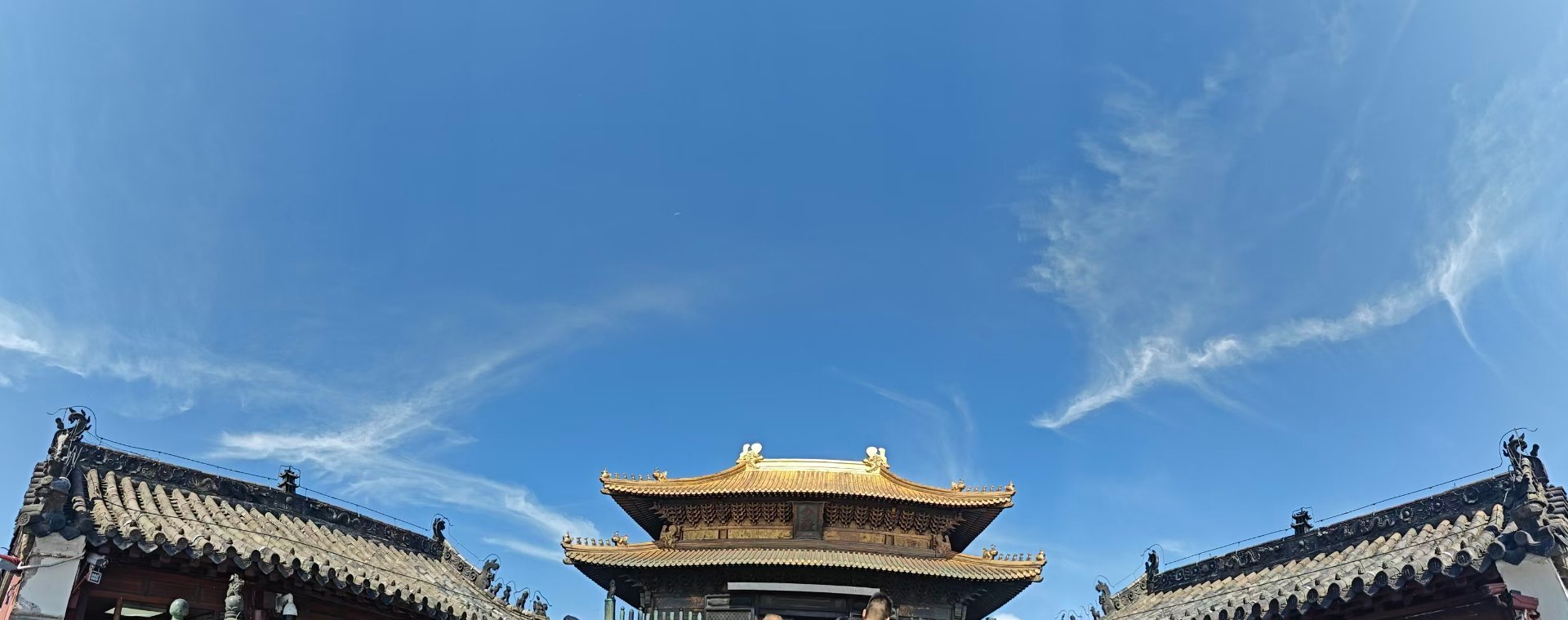
1,612 m, the crown of Wudang. At dawn the gilded bronze hall appears to float in the sea of cloud. Children hang a wish plaque beneath the “One Pillar Holding Up the Sky” gateway — a moment of seriousness no classroom lecture can match.
The best-preserved imperial Daoist temple on the mountain: red walls, green tiles, ancient cypresses. If timing allows, we watch a Daoist rite between the morning bell and the evening drum.
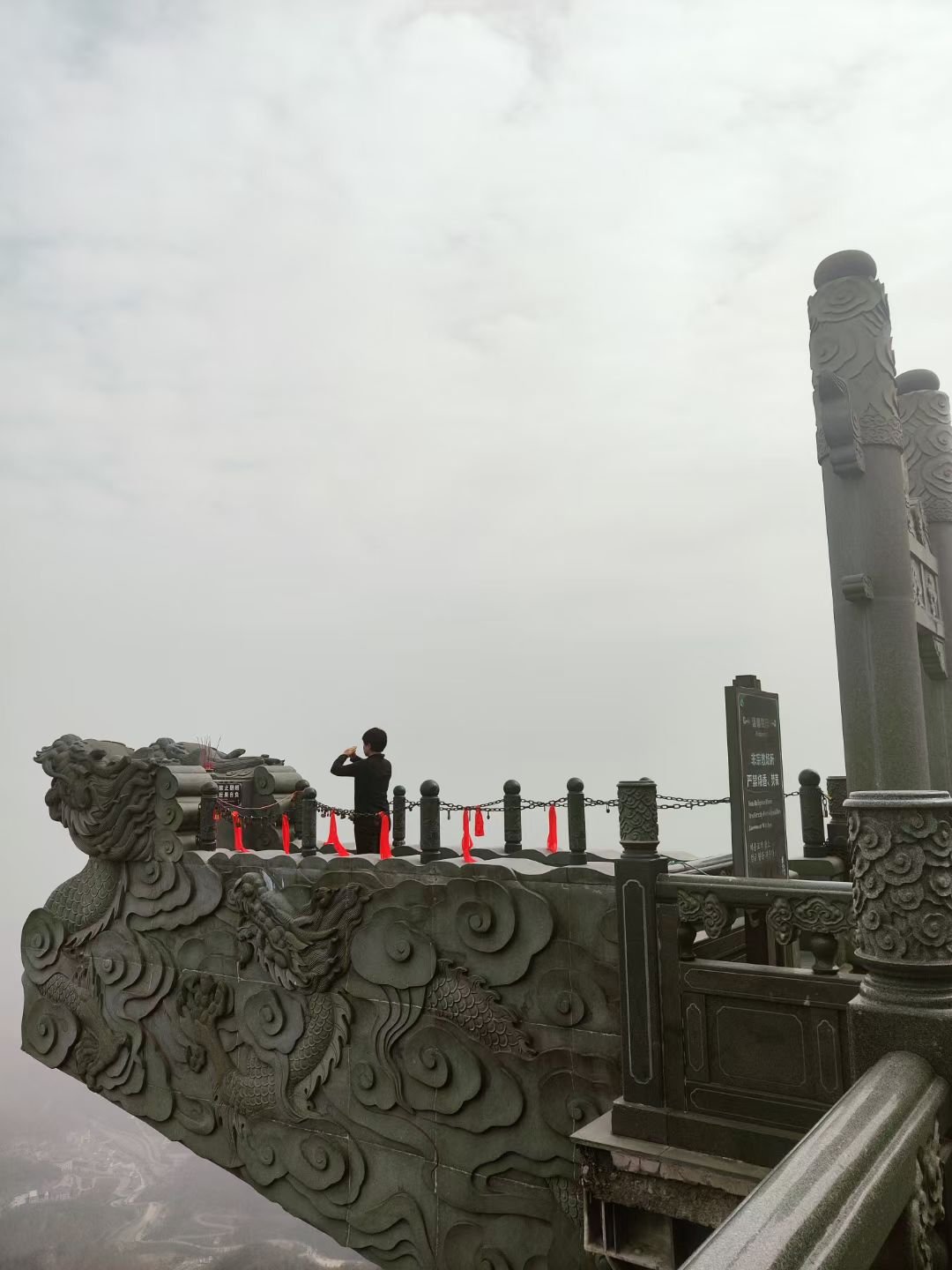
The “Dragon Head Incense” juts out over a sheer drop, cloud boiling below. Children learn what devotion on a cliff edge means — and why restraint and self-knowledge matter more than daring.
The “Nine-Bend Yellow River Wall” folds nine times along the slope; “four gates in one li, ten li of osmanthus scent”. We set an architecture treasure hunt here to teach Ming-dynasty design.
The valley where Zhang Sanfeng is said to have watched a snake and a bird fight, and understood internal boxing. We hold our partner drills here — punching to the sound of running water.
Once the command centre for the great Ming construction of Wudang. We walk it to understand the Eastern wisdom behind the character 武 (wu): to stop the spear.
A thousand years of the mountain in one hall — imperial edicts, stone steles, Daoist medical texts, statues. Children read a living history of Wudang with their own eyes.
Your base: Qiongtai Wudao Academy, 1,350 m
You sleep inside the scenic area, next to the cable car station and inside the cloud line — not in the commercial strip at the foot of the mountain. Open the window in the morning and there is a ridge; at night the Milky Way drops to the eaves. Rooms are twins with private bathrooms, air-conditioning, heating and 24-hour hot water. This is what makes the programme different from a day trip: the mountain is where you live, not somewhere you visit.
Who teaches you
Master Qingfengzi · 16th-generation lineage holder, Wudang Xuanwu Sect · National-level intangible cultural heritage inheritor · Abbot of Qiongtai Wudao Academy
- Decades of martial and Daoist practice; a direct holder of Wudang internal arts
- Teaches the opening class and the closing masterclass, and presents each child's certificate
World Champion Coaching Team · Wushu · Tai Chi · Health Qigong
- Coaches of world-champion level, including Fei He, Dong Haotian and Cai Qianmei
- They convert competitive precision into lessons a child can follow
Resident Wudang Disciples · Young Daoist priests and coaches who live on the mountain
- Run the daily teaching and day-to-day companionship
- They know the mountain, the forms, and how to keep children engaged
Qingjian Exploration Team · Trip leader · welfare staff · on-trip medic
- Logistics, safety, photography and video throughout
- English-speaking coordinator assigned to international families
The daily rhythm
The day is built around the hours Daoist practice assigns to the body, not around a tour bus timetable:
- 06:30–07:30 (chen hour) — Five Elements Qigong. In Daoist body-clock thinking this is when the large intestine is active and the body expels what it no longer needs: a gentle guided practice to clear and regulate.
- 07:45–08:30 — breakfast and rooms.
- 08:45–10:45 (si hour) — Tai Chi Nine Forms or Taoist Ba Duan Jin, timed to the hours of the spleen and stomach, after the body has cleared and before it has to digest.
- Afternoon — temple study, heritage classes or mountain excursions.
- Evening — standing or sitting meditation, sound-and-stillness practice, or a talk over Daoist tea.
Day-by-day
Pick-up at Wudangshan West high-speed rail station, lunch · Wudangshan Museum, Yuxu Palace and the old street · transfer up the mountain to Qiongtai Wudao Academy · evening Daoist tea talk — a cup of mountain tea, and a Daoist priest talking about the mountain, the practice, and the relationship between people and nature.
Morning practice (Five Elements Qigong + Tai Chi Nine Forms / Ba Duan Jin) · afternoon herbal incense class: meet the herbs, smell the medicine, sew your own wellness sachet · evening sound-and-stillness session, a rare practice you will not find in ordinary martial arts schools.
Morning practice · afternoon study visit to Nanyan Palace (the cliff-edge Dragon Head Incense) and Zixiao Palace (imperial temple, morning bell and evening drum) · evening standing meditation (zhan zhuang).
Morning practice · afternoon pilgrimage and quiet sitting at the Golden Summit (1,612 m), hanging a wish plaque before the gilded hall · Taizipo architecture treasure hunt en route · evening sitting meditation.
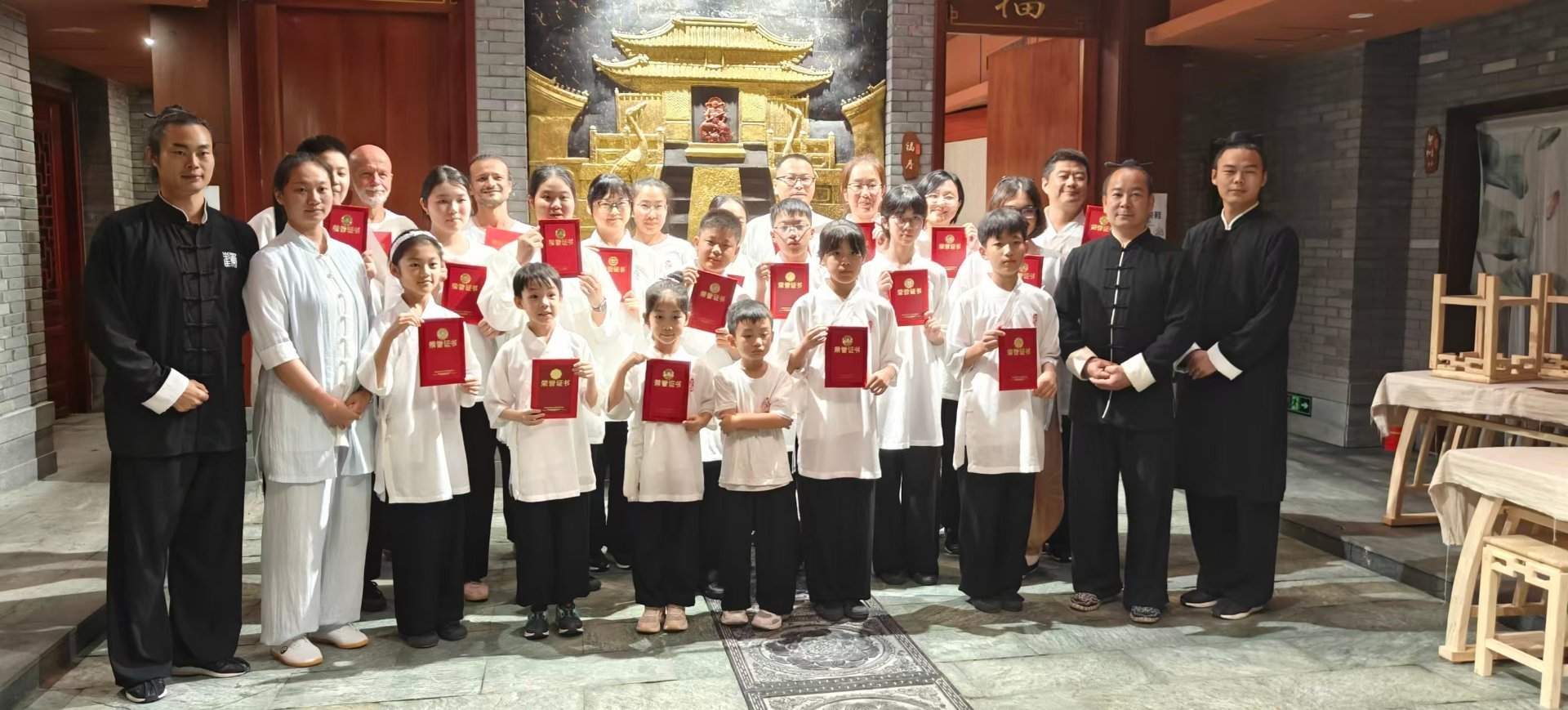
Morning practice · partner drills and graduation demonstration at Xiaoyao Valley · lunch · graduation ceremony with the “Little Daoist” certificate and the parent–child training video · transfer down and drop-off at Wudangshan West station.
The order of visits may shift with cable car schedules and weather; the teaching content never reduces.
What you take home
- The “Little Daoist” graduation certificate issued by Qiongtai Wudao Academy
- One full set of Tai Chi Nine Forms and one full set of Ba Duan Jin you can perform on your own
- A hand-sewn Chinese herbal wellness sachet
- A wish plaque hung at the Golden Summit
- Photos and video of your family training together
- For parents: a daily wellness routine you can continue at home after the mountain
Price & what's included
¥4,500 per person (approximately US$630 at ¥7.1/US$), the same for adults and children, for all three sessions. No single-session surcharge, no holiday markup.
Included
- 4 nights' accommodation at Qiongtai Wudao Academy (twin room, private bathroom, A/C and heating, hot water 24h)
- 4 breakfasts and 8 main meals (group table meals; vegetarian and allergy needs on request)
- Wudangshan entrance ticket, in-park shuttle bus, and tickets for the Golden Summit and Zixiao Palace
- All martial arts, qigong and intangible cultural heritage classes, plus all materials
- Local masters, assistant coaches, Qingjian trip leader, welfare staff and on-trip medic
- Travel accident insurance for the duration of the programme
- Pick-up and drop-off at Wudangshan West high-speed rail station
- English interpretation for international participants
Not included
- International and domestic travel to/from Wudangshan (flights, trains)
- Personal expenses, souvenirs, extra snacks and drinks
- China visa fees and personal travel/medical insurance
- Hotel nights before or after the programme (we are happy to book them for you)
Practical information for international visitors
Getting there
High-speed rail to Wudangshan West station (武当山西站) is the easiest route — roughly 2 hours from Wuhan, 2.5 hours from Xi'an, with direct or one-change services from Beijing, Shanghai, Guangzhou and Chengdu. Once you book, we send the exact train numbers that fit the pick-up window. Alternatively fly to Shiyan Wudangshan Airport (WDS), or to Wuhan Tianhe International (WUH) and connect by 2-hour high-speed train. We arrange pick-up and drop-off for every participant.
Visa documents
We issue an English booking confirmation and a day-by-day itinerary letter on our letterhead to support your China tourist (L) visa application. Many nationalities can now enter China visa-free or under the 240-hour visa-free transit scheme — please confirm your own eligibility with the Chinese embassy or consulate before booking flights. Visa approval is at the discretion of the authorities; we supply the documents, not the guarantee.
Language
Classes are taught in Chinese, which is part of the experience. An English-speaking coordinator stays with international participants throughout, translating instructions, safety briefings and cultural explanations in real time. Key moves are also demonstrated slowly and counted, so follow-along works regardless of language.
Payment
WeChat Pay, Alipay, Chinese bank transfer, or cash (CNY) on arrival. A deposit secures the place; the balance is due before the programme starts. International bank transfer can be arranged for deposits — ask us for details; fees are borne by the sender.
Accommodation & meals
Twin rooms at the academy, 1,350 m inside the scenic area, with private bathroom, air-conditioning, heating and 24-hour hot water. Family rooms and single supplements are available on request. Meals are Chinese group-style tables with plenty of vegetables, rice, noodles, tofu, eggs and local Hubei dishes; vegetarian, halal-ish (no pork) and allergy requirements can be arranged if you tell us in advance. Bottled and boiled water is provided daily.
Connectivity
Wi-Fi is available at the academy and in most temple areas. We suggest installing WeChat before you arrive (we coordinate everything on it) and buying a local data SIM or an eSIM at the airport. Google services, WhatsApp and Instagram require a VPN on the Chinese mainland; WeChat, Alipay and local maps work directly.
Packing
Two or more sets of comfortable sports clothing, soft-soled training shoes, a warm jacket (the mountain is 6–10 °C colder than the city), a rain jacket, a refillable bottle and any personal medication. For the January and February sessions: a heavy down jacket, non-slip winter shoes, gloves, scarf and hat. Loose clothing works fine — you do not need to buy a uniform, though one can be purchased on the mountain.
Health, safety & insurance
Travel accident insurance for the programme is included; we strongly recommend you also carry your own travel medical insurance. A medic travels with the group, and Shiyan city hospitals are reachable within about an hour. All mountain transfers use the official park shuttles and cable car — no unmarked trails. Clifftop areas are visited only on designated viewing routes. Please tell us about any medical condition, allergy or dietary restriction at the time of booking.
Solo travellers & custom dates
You do not need to be a family to join. Adults travelling alone, single parents with one child, couples, and small groups of friends are all welcome, and we will pair solo participants with a training group rather than leaving them on the side. Groups of 10 or more can request a private departure on any date of the year, including weekdays and summer; price on application.
Dates & how to book
- National Day session: 1–5 October 2026
- New Year session: 1–5 January 2027
- Spring Festival session: 7–11 February 2027 (days 2–6 of the Lunar New Year)
- Private departures: any date of the year for groups of 10 or more — price on application
Each public session is capped at 40 participants and closes when full. To reserve a place, send a WeChat message to +86 135 5417 4290 (Ms. Gui, 08:00–20:00 China time) with your session, the number of participants and their ages. A deposit holds the place; the balance is due before the programme begins.
Enquiries (English OK)
WeChat / WhatsApp:
+86 135 5417 4290
Ms. Gui · 08:00–20:00 China time
Phone: +86 27 8731 0545
Group & school bookings:
+86 139 8605 8728 (Mr. Zhao)
Price: ¥4,500 per person · 5 days
Next sessions:
1–5 Oct 2026
1–5 Jan 2027
7–11 Feb 2027
Solo travellers welcome
Frequently asked questions
Q: I have never practised martial arts. Will I keep up?
A: Yes. Tai Chi Nine Forms and Ba Duan Jin are entry-level by design. Coaches split participants into small groups by age and experience and start from posture and breathing. Previous beginners have completed the full set by graduation.
Q: Do parents have to take part?
A: Parents are expected to train alongside their children — that shared effort is the point of the programme — but the pace is adjusted by group, and a parent who prefers to observe a session may do so. Children aged 8 and over may also join without a parent.
Q: Can I come to China on my own and join a scheduled session?
A: Yes. Independent travellers are welcome on all published dates. We send the exact train to catch, meet you at Wudangshan West station, and handle accommodation, meals and interpretation from there. See “Solo travellers & custom dates” above.
Q: Is Wudangshan suitable in winter?
A: Winter is colder (6–10°C below the city) but it is also when the snow, the rime and the sea of cloud over the Golden Summit are at their best, and the mountain is at its quietest. Indoor halls, temple corridors and the museum serve as backup venues, and morning practice moves indoors or to sheltered platforms in bad weather. Core classes are never simply cancelled.
Q: What is the cancellation policy?
A: 15 days or more before the start: full refund. 7–14 days: 80%. 3–6 days: 60%. 1–2 days: 40%. On the start date: 30%. If we cancel because of extreme weather or force majeure, you get a full refund or a free change of date.
Q: How physical is the programme?
A: Moderate. Expect two morning practice blocks (about 60 and 120 minutes), an afternoon excursion or class, and an evening session. Mountain walks are on paved temple paths and steps, with the park shuttle and cable car for the long climbs. Participants should be able to walk 3–5 km a day at an easy pace.
Q: What should children bring, and is there a uniform?
A: Loose sports clothing and soft-soled shoes are enough; a Wudang training suit can be bought on the mountain if you want one for photos. Leave laptops, tablets and large amounts of cash at home.
Q: How do I book?
A: Add us on WeChat at +86 135 5417 4290 (Ms. Gui, 08:00–20:00 China time) or call +86 27 8731 0545. We reply in English. Please send names as shown on passports, passport numbers, ages, heights and weights (for training wear), any medical conditions and dietary requirements.
Cancellation & refunds
| When you cancel | Refund |
|---|---|
| 15 days or more before the start date | 100% |
| 7–14 days before the start date | 80% |
| 3–6 days before the start date | 60% |
| 1–2 days before the start date | 40% |
| On the start date | 30% |